17 November, 2023
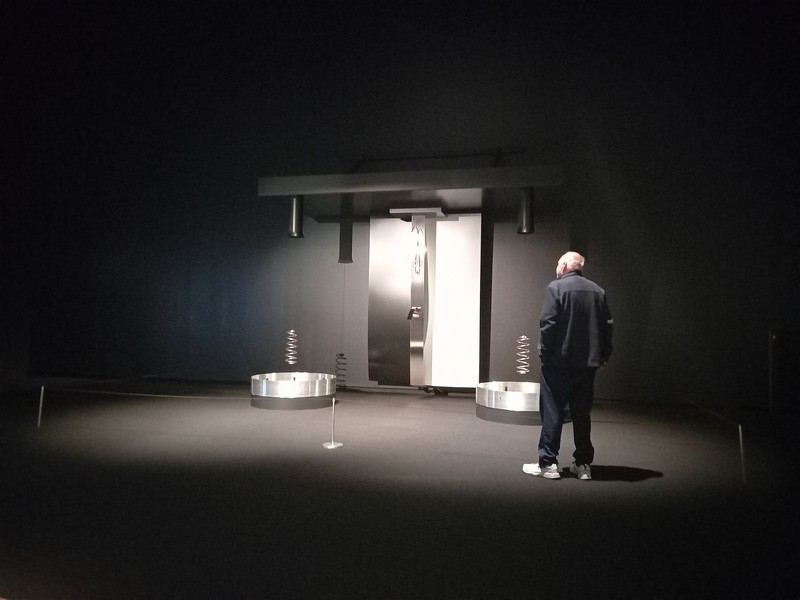
It was raining when we woke up this morning, but that didn’t spoil the day. Started with breakfast at Chaos (our new favourite cafe), and then straight to the Govett Brewster in time for the 11.30 showing of the Len Lye kinetic sculpture Storm. Seeing the current Len Lye installations was a main reason for our visit to New Plymouth (the other was to fill in the limbo time till we can get into our new home). And it didn’t disappoint. There’s a static photo below, but it doesn’t begin to do justice to the work, which comprises three individual sculptures. It’s not only the movement that makes it, but the noise generated by that movement of what L tells me are probably sheets of aluminium or maybe steel. Having said that, I don’t think this installation blew me away quite as much as Sea Snakes did, back in 2020.
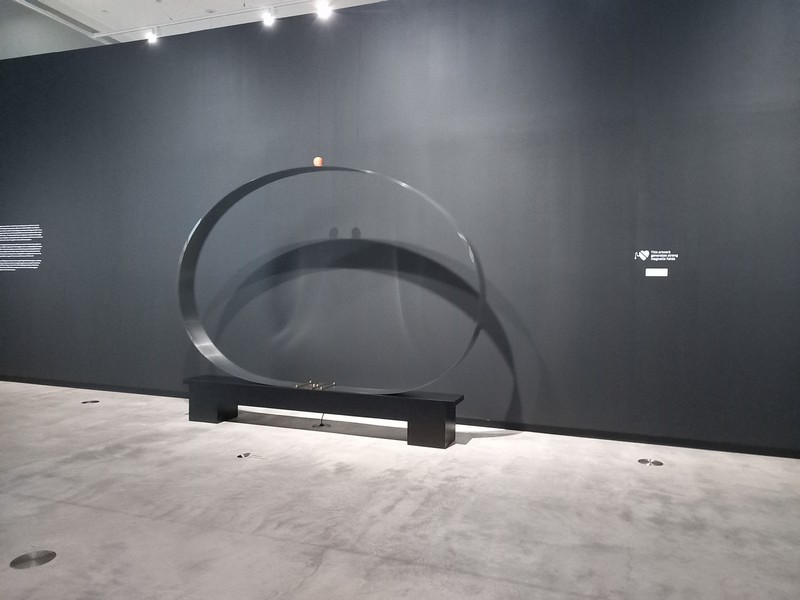
Storm isn’t the only Len Lye installation on display. There are about five other ones, each wonderful. Some of those may be on permanent display, I’m not sure, but I remember seeing at least a couple of them on our previous visit. Two that I don’t remember previously were Zebra (1965) and Universe (1964–1976). They are mesmerising, both for their movement and their sound. Zebra is a striped fibre glass wand that starts slowly and winds itself up to a spinning, humming, whizzing three-dimensional hourglass shape. Stunning. Universe is a sprung steel loop with electromagnets and a ball. Here’s Lye’s description: “It’s rigged to bounce up and down and sway every which way. And when it bounces it hits a ball which makes it emit a very sonorous sound.” I just love both of these. They’re both genius. Still photos don’t do justice; you have to see (and hear) them in performance. The exhibition also includes two animations, The Peanut Vendor (1933) and Birth of the Robot (1936).
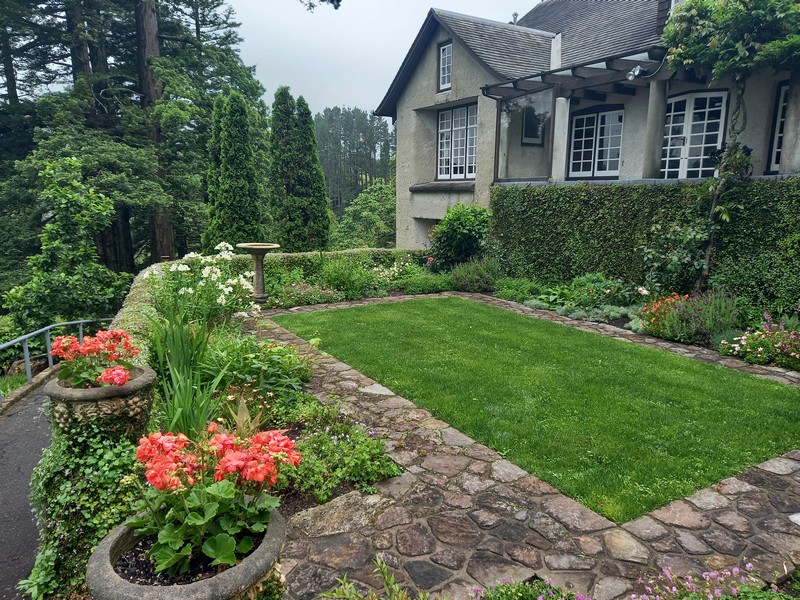
Later this afternoon, the rain had cleared so we decided to zoot out to Tupare, about 5 kms from New Plymouth. Wow. I thought yesterday’s two gardens were great, but this was a notch further up the ladder. That of course is my biased view, because it’s a garden that fits with the style of gardening I like (although not one I could ever achieve – it takes genius in both garden design and plant knowledge to achieve a garden like this).
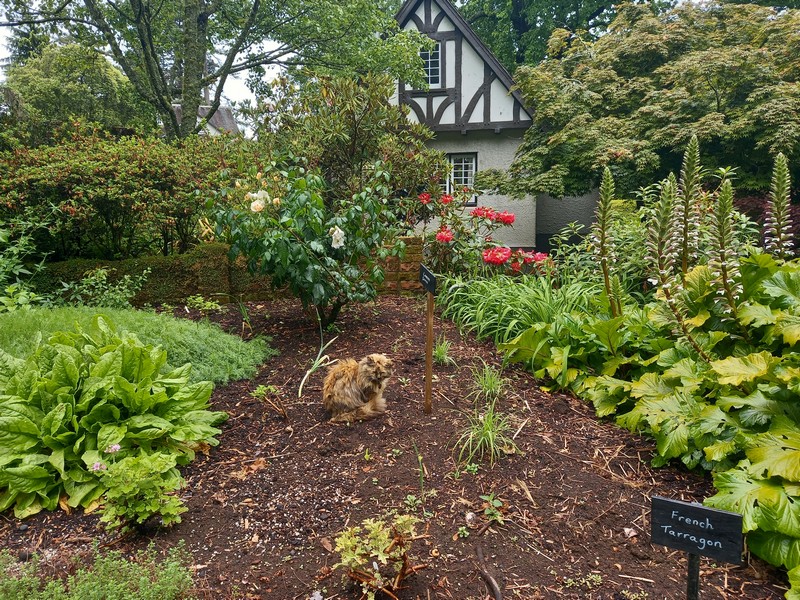
Like yesterday’s gardens, Tupare is grand scale. It has mature English trees (oak, beech, chestnut), rhododendrons and azaleas (the latter sometimes used as hedging), hydrangeas, more intimate spaces with lawn and herbaceous borders, water-loving plants along streams and ponds, and more . . . this garden has it all. Developed by the Matthews family from 1932, it is an amazing example of landscaping on a hillside. Winding paths lead to yet more paths and more gardens, all there for the exploring of. It forms the most luscious setting for the arts and crafts Taylor-Chapman-designed house that was the Mathews family home – complete with tennis court. We only spent a short time there, but it was perfect timing as we were the only visitors. L gave chose the path of least resistance (a seat) which left me to wander as I liked. This is a definite top-of-the-list visit if you are in New Plymouth. I go home inspired to get stuck into my new pocket handkerchief garden, which I’ll be starting from scratch.






 Off Highway One